
How to install FreshRSS on VPSnet
Managed install of FreshRSS from the Applications panel with HTTPS included. Account setup follows this application’s own first-run flow.
Prerequisites
Only what you need before the install steps below — nothing repeated from the guide.
A VPSnet account with access to the control panel.
A VPS or Cloud VPS that meets the FreshRSS resource guidance on the product page.
Install FreshRSS from the panel
Follow the Applications panel path end to end. Each step covers one action only.
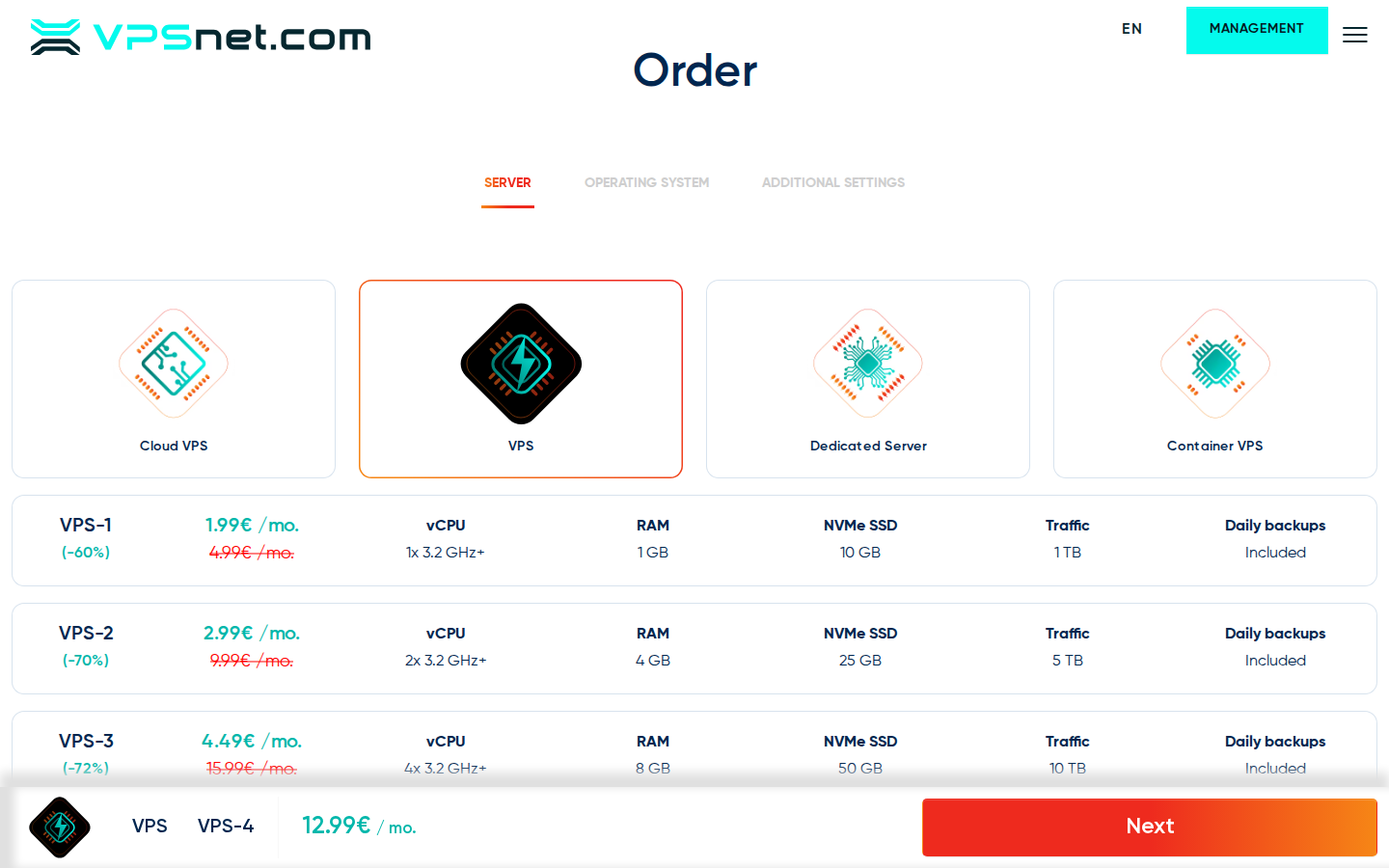
Choose a plan for FreshRSS
Open the FreshRSS product page and note minimum and recommended vCPU, RAM, and disk. Order a new Cloud VPS or VPS, or use a running server that still has free capacity.
Install from Applications
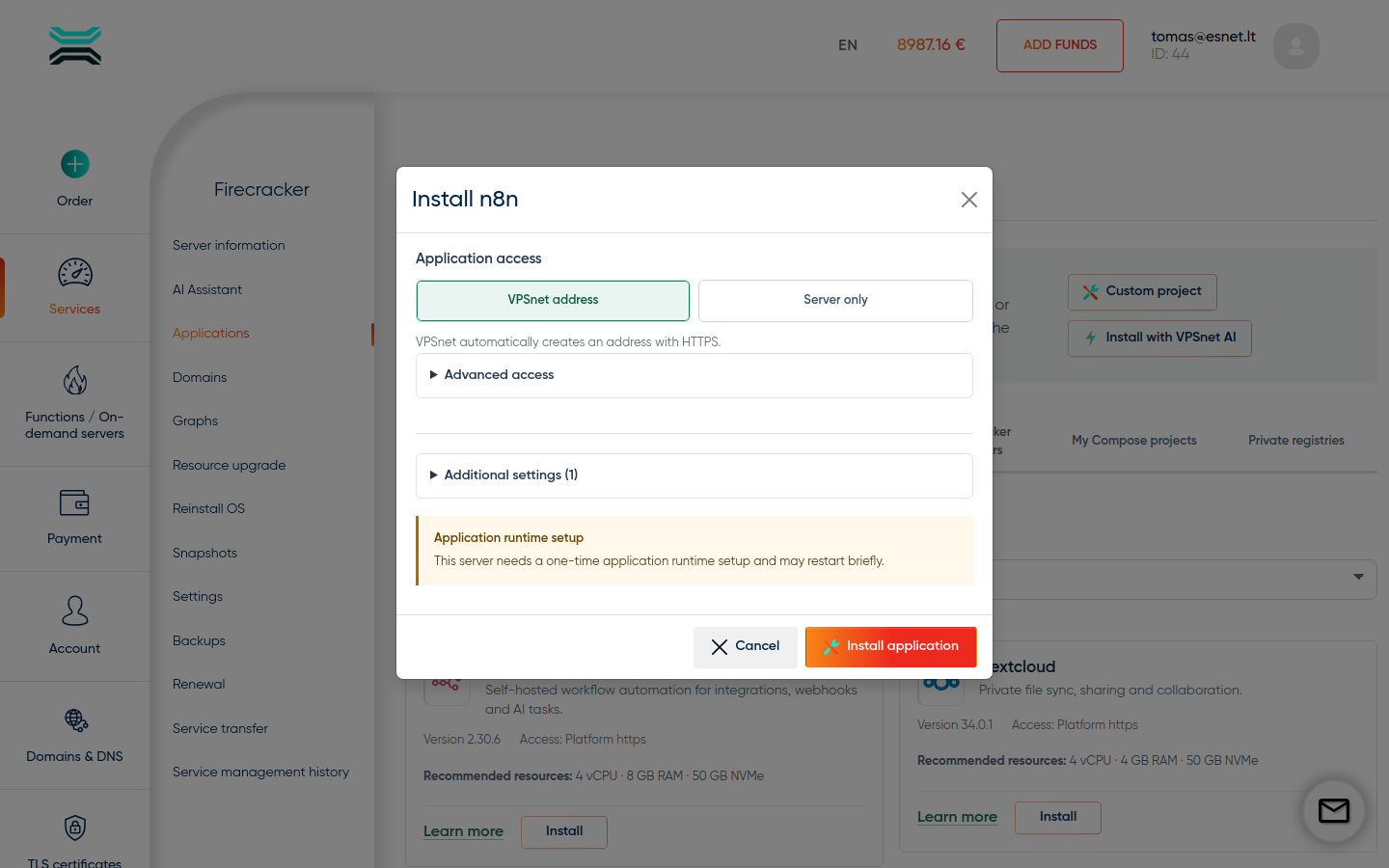
In the service panel open Applications → FreshRSS → Install. Choose an access mode (VPSnet HTTPS is the usual default). Expand Additional settings for optional fields such as timezone, titles, flags, and Optional packs. Turn on Use VPSnet AI only if the dialog offers it and you want a billed AI key. This recipe does not generate one-time panel credentials, so complete account setup inside the application when it opens. Confirm a runtime restart if the panel asks.
Open the managed HTTPS URL
When FreshRSS exposes a web UI, VPSnet assigns a *.vpsnet.cloud hostname. A short Certificate pending state is normal while DNS and SSL finish. When the status is active, use Open URL in Applications.
Finish your first task in FreshRSS
Open FreshRSS and follow its owner setup or sign-in flow. Then complete one useful first task (create a project, publish content, or run the primary workflow). This confirms that the application is ready to use.
Step 04FreshRSS after completing its first useful taskFreshRSSScreenshot coming from a live install — layout reserved so the guide stays visual.Operate from the panel
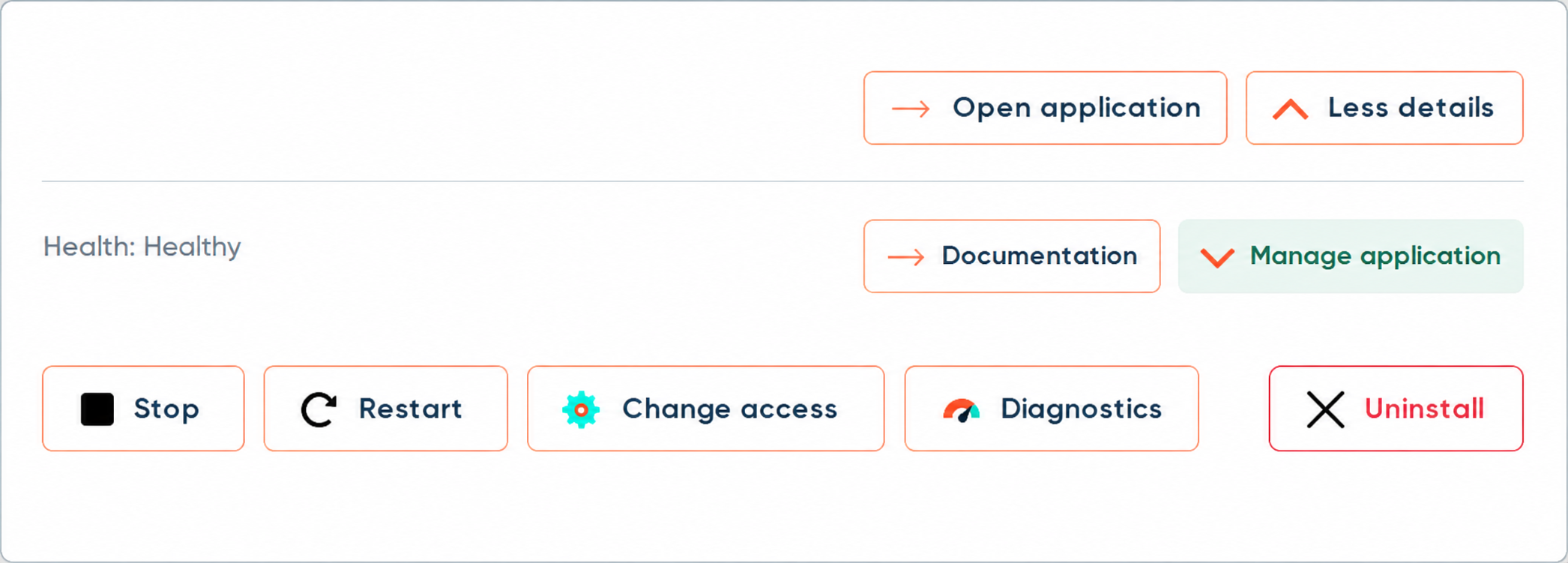
Use Applications for restart, logs, health, update, and uninstall. Avoid editing the host Compose by hand — catalog installs are version-pinned managed recipes.
Options in the install dialog
The Applications → Install dialog is more than a single Install button. These controls appear when the recipe supports them. Safe defaults apply if you leave optional fields unchanged.
Application access
Choose how you reach the app at install time: VPSnet HTTPS (managed *.vpsnet.cloud), Private (this server only), Public IP (cleartext HTTP), Managed HTTPS on a DNS zone you own, or External HTTPS when you terminate SSL. You can change this later on the installation page.
Additional settings
Expand Additional settings for optional recipe fields and packs. Empty fields keep recipe defaults; this recipe does not generate one-time panel credentials.
Runtime restart
The first managed app on a server may need a short runtime restart. The dialog asks for confirmation. Later installs on the same server usually skip this.
First usage of FreshRSS
After Open URL, complete the application’s own owner setup or sign-in flow. Then finish one real task so the install is useful, not only healthy.
Sign in or create the first admin
Follow the application’s own owner setup or sign-in flow. Choose and store a strong password when the application asks for one.
Finish any in-app setup wizard
Many apps ask for site name, timezone, language, or a first workspace on first open. Complete that wizard before you invite others. Optional packs (ADDON_/PACK_ flags) are pinned at install — they still need their own first-run screens inside the app.
Do one real job, then operate from the panel
Publish content, create a project, send a test, or run the primary workflow. That confirms the install is useful. Restart, logs, health, update, and uninstall stay in Applications — do not edit host Compose by hand.
All configuration variables
Customer-editable fields from the public catalog API for this recipe version, plus curated tips where we publish them. In the panel these fields live under Additional settings (Basics and Optional packs). Access mode is a separate control above that section.
| Variable | Label | Type | Required | Secret | Default | Meaning |
|---|---|---|---|---|---|---|
TIME_ZONE | Time zone | string | Required | No | UTC | IANA time zone used for feed dates and scheduled refreshes, for example Europe/Vilnius. |
Additional notes
- The install dialog has more than the variables table: Application access (VPSnet HTTPS, Private, Public IP, Managed HTTPS, External HTTPS when offered), Use VPSnet AI plus a model picker when the recipe supports it, Additional settings (Basics and Optional packs), and a runtime restart confirmation on the first managed install.
How you reach the app and set up your account
This recipe does not generate one-time panel credentials. Open the application and follow its own owner setup or sign-in flow.
Sizing and tested targets
| Requirement | vCPU | RAM | NVMe |
|---|---|---|---|
| Minimum | 1 | 1 GB | 10 GB |
| Recommended | 2 | 2 GB | 20 GB |
| Server type | Operating system | Architecture |
|---|---|---|
| VPS | Almalinux 10 | x86_64 |
| VPS and Cloud VPS | Almalinux 9 | x86_64 |
| VPS | Centos stream 10 | x86_64 |
| VPS and Cloud VPS | Centos stream 9 | x86_64 |
| VPS and Cloud VPS | Debian 12 | x86_64 |
| VPS and Cloud VPS | Debian 13 | x86_64 |
| VPS | Rocky 10 | x86_64 |
| VPS and Cloud VPS | Rocky 9 | x86_64 |
| VPS and Cloud VPS | Ubuntu 22.04 | x86_64 |
| VPS and Cloud VPS | Ubuntu 24.04 | x86_64 |
| VPS | Ubuntu 26.04 | x86_64 |
| Cloud VPS | Almalinux 8 | x86_64 |
| Cloud VPS | Arch latest | x86_64 |
| Cloud VPS | Debian 11 | x86_64 |
| Cloud VPS | Fedora 39 | x86_64 |
| Cloud VPS | Fedora 40 | x86_64 |
| Cloud VPS | Opensuse 15.5 | x86_64 |
| Cloud VPS | Oracle 9 | x86_64 |
| Cloud VPS | Rocky 8 | x86_64 |
| Cloud VPS | Ubuntu 20.04 | x86_64 |
FAQ
01Why does Applications not show a generated password?
This recipe does not generate one-time panel credentials. Complete the application’s own owner setup or use the account model documented by the application. VPSnet will not invent or email a password for it.
02Open URL still shows Certificate pending after several minutes.
Confirm the install health is green, then wait for DNS/SSL to finish. If access settings offer temporary public HTTP, you can use it only as a short workaround.
03Where are timezone, add-ons, and other extra install options?
Expand Additional settings in the install dialog. Basics holds optional recipe fields (timezone, titles, flags), and Optional packs sit in the same section. Access mode is at the top. This recipe does not generate one-time panel credentials; complete account setup inside the application. You can change access later from the installation page.
04I need environment variables that are not in the install form.
Only customer-editable blueprint fields are exposed at install and in the table below. Remaining env belongs to the managed recipe. Custom Compose is a separate advanced option when enabled on the service.